Close

Yemaya’s Kiss
Media: White Stoneware, Glazed & Acrylic Stain
Dimension: 20” x 18 ¾” x 8”
Year: 2016

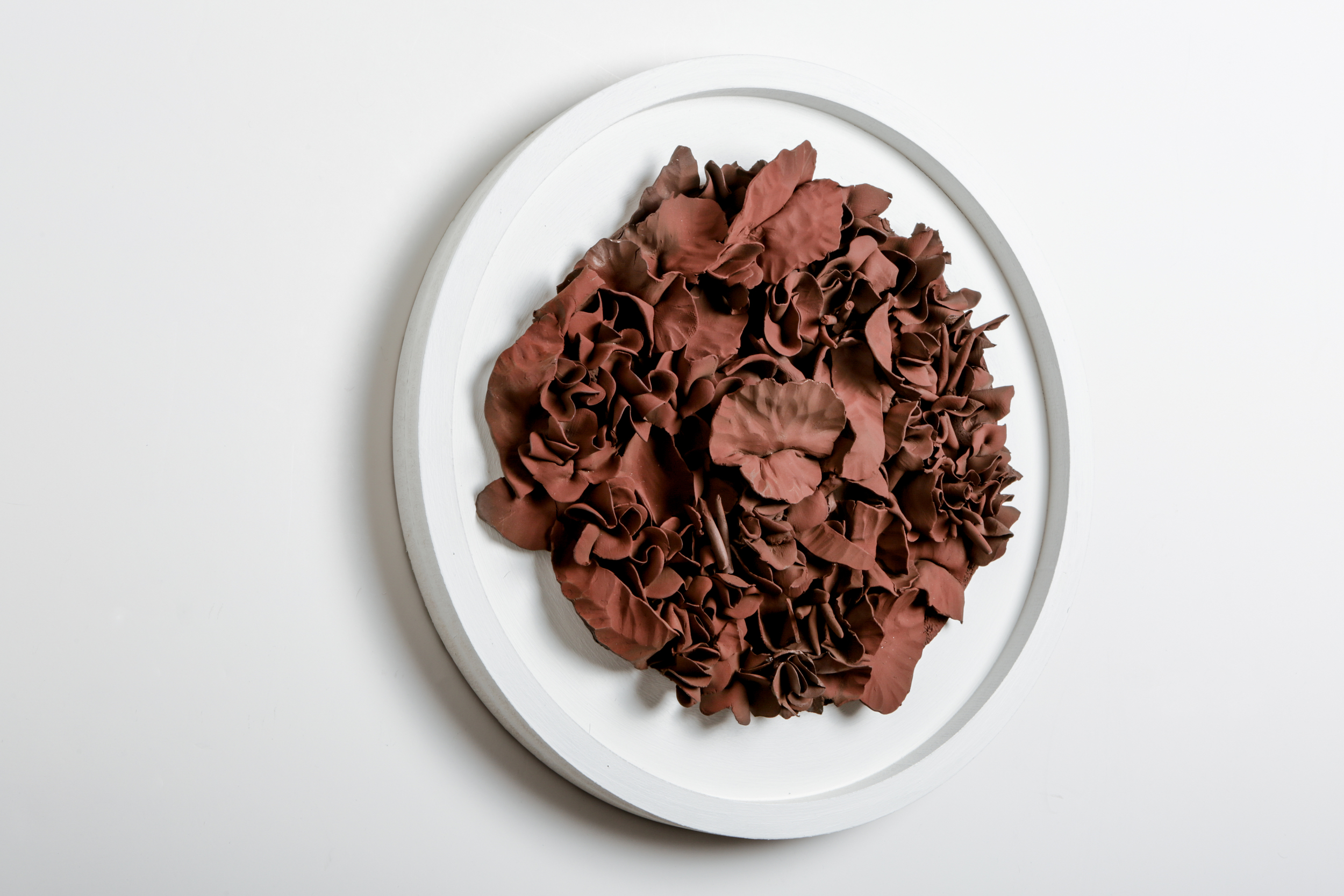
Pink Manifesto
Media: White Earthenware, Wood, Glaze & Acrylic Stain
Dimension: 20 inches dia.
Year: 2016

Left: True Blue (Melancholy)
Right: grisaille Nightfall (Pink Wave)
Media: White Earthenware, Glazed & Acrylic Stain
Dimensions Left: 15.5” x 14.5” x 4 ¼”
Dimensions Right: 14.5” x 12.5” x 5 ¼ “
Year: 2016

Private Collection

Flotus
Media: Glazed Porcelain & Wood
Dimension: 15 X 15 inches
Year: 2015

Follicles
Media: White Earthenware, Terra Cotta & Underglaze
Dimension: 12 2/4” x 14.5” x 6 1/4”
Year: 2016

Private Collection

Left: Ode to Ọṣun
Right: Caribbean Hue (Watercolor Courage)
Media: White Stoneware Ceramics, Glazed & Acrylic Stain
Dimension Left: 21” x 15.5” x 7 ¼”
Dimension Right: 24.5” x 18” x 5 ¾”
Year: 2016

Details

Grisaille Nightfall (Pink Wave)
Media: White Earthenware, Glazed & Acrylic Stain
Dimensions: 14.5” x 12.5” x 5 ¼”
Year: 2016

Private Collection

Solar Flare
Media: White Earthenware, Glazed & Acrylic Stain
Dimensions: 8.5” x 8” x 8”
Year: 2016

Private Collection

Ode to Ọṣun
Media: White Earthenware, Glazed & Acrylic Stain
Dimension Left: 21” x 15.5” x 7 ¼”
Year: 2016

Submerge
Media: White Earthenware, Wood & Synthetic Flora and Fauna
Dimension: 22 inches dia.
Year: 2015

Moonlight Coffee
Media: White Stoneware, Glazed & Acrylic Stain
Dimension: 12 “ x 13 ¾” x 5”
Year: 2016

Caribbean Hue (Watercolor Courage)
Media: Terracotta Clay, White Earthenware & Porcelain
Dimension: 24.5” x 18” x 5 ¾”
Year: 2016

Right: Yemaya’s Kiss
Left: Ode to Ọṣun
Media: White Stoneware, Glazed
Dimension Right: 20” x 18 ¾” x 8”
Dimension Left: 21” x 15 ½” x 7 ¼”
Year: 2016

False Memories
Media: Ceramic, Wood, Glazed & Acrylic Stain
Dimension: 20 inches dia.
Year: 2016

True Blue (Melancholy)
Media: White Earthenware, Glazed & Acrylic Stain
Dimensions Left: 15.5” x 14.5” x 4 ¼”
Year: 2016

Private Collection

Left: Iridescent Yellow (Sicilian Chinoiserie)
Right: Memory (Avocado Stained)
Media: White Earthenware & Glazed
Dimension Left: 12.5” x 10.5” x 6”
Dimension Right: 12.5” x 12” x 6 ¼”

Iridescent Yellow (Sicilian Chinoiserie)
Media: White Earthenware, Glazed & Acrylic Stain
Dimension: 12.5” x 10.5” x 6”
Year: 2016

Floaters
Media: Glazed Porcelain & Wood
Dimension: 15 X 15 inches
Year: 2015

Black Media: Stained Terra Cotta Earthenware & Wood Dimension: 22 inches dia.  Year: 2015

Black
Media: Stained Terra Cotta Earthenware & Wood
Dimension: 22 inches dia.
Year: 2015

Memory (Avocado Stained)
Media: White Earthenware, Glazed & Acrylic Stain
Dimension: 12.5” x 12” x 6 ¼”
Year: 2016

Details


Through the use of clay, Morel simultaneously expresses beauty and anguish while reflecting on issues related to race and the decaying environment. Unifying elements from land and sea, Morel amplifies the socio-environmental experience of the African diaspora, particularly Afro-Caribbeans, through ecological metaphors of Black fragility, skin bleaching and colorism. Inspired by scientific research, environmental research and personal experiences, the title, Follicles | Cells | Biota refers to an ecology of systems that examines the relationships between organisms and their physical surroundings. Together, the title and artwork provoke conversations about people of color and their complex relationship to their physical surroundings. Through intensive detailed labor, Morel constructs beautiful and fragile ceramic pieces that mimic the current state of our dying coral reef systems as a representation of Black fragility. As a result of our current political climate, people of color have been forced to prioritize social and political issues, like racial discrimination, segregation, and disenfranchisement, which pose the most apparent danger to their livelihoods and environment. Decaying buildings, polluted air from factories and crowded living conditions make up the ecological environment of inner city Blacks, while suburban whites have an ecological environment that reflects more suitable living conditions in terms of greener communal spaces and adequate city maintenance. These two ecologies - coral reef systems and the Black community - bare the weight of unforeseen circumstances of waste pollutants and lead poisoning at the hands of environmental policymaking. Although navigating the world as a Black Man is full of anguish, Morel still sees the beauty in his fragile existence, the same way he sees beauty and hope in a dying environment. Follicles | Cells | Biota aims to envision a new environmental renaissance in which the African Diaspora have the agency to play an active role in reclaiming the health and autonomy of their communities; so that their living conditions do not become a sentence to an early, systemic, and intergenerational death. If, as a global collective, we can come together and save the Great Barrier Reefs, then there can be hope for the African Diaspora.

Follicles | Cells | Biota

“Haitian-born ceramicist Morel Doucet’s series Follicles | Cells | Biota manipulates clay and color to examine relationships between descendants of the African diaspora and the physical environment, specifically drawing a parallel between the world’s dying coral reef systems and Global Black environmental vulnerability. Doucet argues that the current political climate has caused issues like racial discrimination and disenfranchisement, which pose the most apparent danger, to overshadow pressing problems posed by urban decay, pollution, Climate Change, and other conditions that contribute to the ecological instability and inviability.” - Curator & Writer, Niama Safia Sandy

Through the medium of clay, Morel Doucet captures both beauty and anguish, reflecting on the intersections of race, environmental decline, and survival. By weaving together elements from land and sea, he amplifies the socio-environmental experiences of the African diaspora—particularly Afro-Caribbean communities—through ecological metaphors that address Black fragility, skin bleaching, and colorism.

Influenced by scientific research, environmental studies, and personal experience, Follicles | Cells | Biota explores the interconnectedness between living systems and their environments. The title evokes a delicate ecology of relationships, mirroring the complex and often precarious ties between communities of color and their physical surroundings. Through meticulous, labor-intensive ceramic work, Doucet parallels the fragility of coral reef ecosystems with the systemic vulnerabilities faced by Black populations.

Historically, people of color have been forced to confront immediate social and political threats—such as racial discrimination, segregation, and disenfranchisement—leaving environmental issues often overlooked. In many urban communities, environmental neglect manifests as crumbling infrastructure, toxic air from industrial pollution, and crowded, unsafe living conditions. In contrast, predominantly white suburban areas often enjoy green spaces, clean air, and well-maintained environments. Both coral reefs and Black communities suffer under the weight of environmental degradation, victims of systemic neglect and discriminatory policymaking.

Despite this landscape of adversity, Doucet finds beauty in vulnerability. His work reflects a belief that, like the world's dying reefs, there remains hope and resilience within Black communities. Follicles | Cells | Biota envisions an environmental renaissance—one where the African diaspora reclaims agency over their health, spaces, and future. Just as the world can unite to protect the Great Barrier Reef, so too can we rally to preserve and uplift Black and Brown communities, ensuring that survival is not the exception, but the standard.